I’m curious, weird, thoughtful, playful, occasionally ranty, deeply strategic, and I build useful things out of strange ideas.
I’m Jeff Borschowa. I am a writer, speaker, podcaster, systems thinker, framework enthusiast, collector of interesting questions, and a self-appointed mad scientist with a filing and retrieval system.
I’ve never been particularly good at fitting into conventional expectations. My brain doesn’t travel in straight lines. I see patterns where others see noise, connect dots between disciplines that were never meant to meet, and ask questions that occasionally make rooms go uncomfortably quiet.
Over the years, people have described me as difficult, unconventional, or a little strange. I’ve learned to appreciate those descriptions. These days, I prefer WEIRD—it fits.
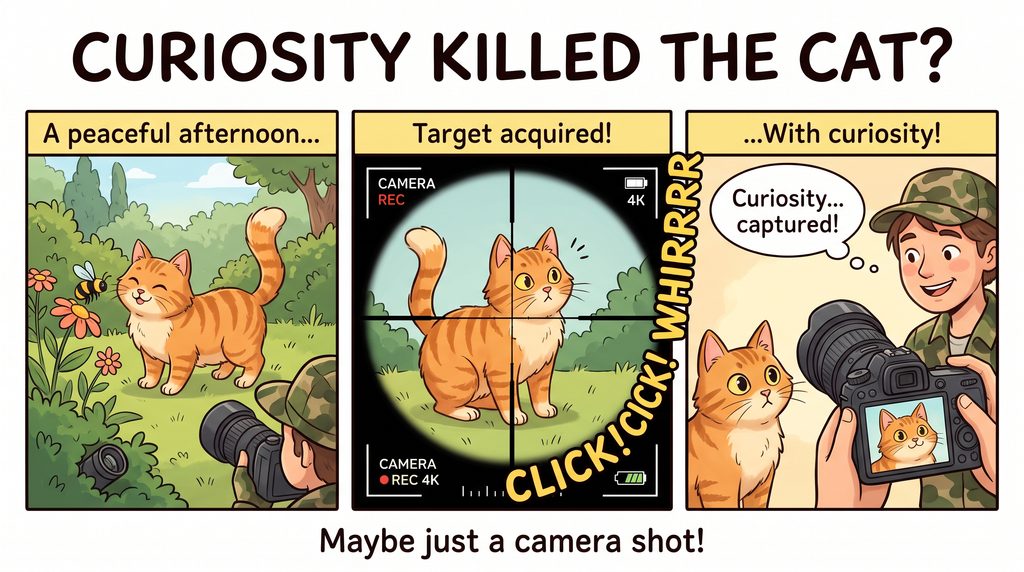
Curiosity Killed the Cat. Allegedly.
For as long as I can remember, I have relied on two deceptively simple questions: “Why?” and “Why not?”
As a kid, these questions were remarkably effective at exhausting adults. Answering one of my questions simply prompted me to ask two more. I wasn’t trying to be difficult; I was genuinely fascinated by how the world worked. Why do we do things this way? Who decided that was the right approach? What would happen if we did the opposite?
Inevitably, the adults around me reached for a familiar defense: “Curiosity killed the cat.”
Even as a child, that expression deeply puzzled me. What had this innocent animal done to curiosity to deserve such a terrible fate? Was curiosity stalking cats? Was there an investigation? Were other domestic animals in danger? Nobody seemed interested in discussing these perfectly reasonable inquiries.
As an adult—and someone who is neurodivergent—I analyzed the saying thoroughly. Underneath the well-intentioned advice meant to keep kids safe, it was also a thinly veiled warning: stop asking questions and conform.
When society discourages curiosity, it discourages the very thinking that leads to innovation, empathy, and discovery. I’ve decided to rehabilitate curiosity’s reputation. As for the cat, my investigation has uncovered no credible evidence that curiosity was responsible for its demise. I suspect a misunderstanding.
My Brain Doesn’t Travel in Straight Lines
I am a nonlinear thinker.
For me, ideas rarely arrive in neat chronological order. An operational challenge in professional services reminds me of a concept from aviation safety, which triggers an insight from behavioral psychology, which connects to a principle of systems architecture. Before long, I’m sketching out a framework that brings three unrelated fields together.
This nonlinear perspective is directly tied to being neurodivergent. Understanding how my mind works has helped me make sense of my life and work:
- I recognize patterns and systemic bottlenecks quickly.
- I experience intense focus when untangling complex problems.
- I have a remarkable ability to wander down intellectual rabbit holes and return with unexpected insights.
I used to spend energy trying to fit my thinking into standard corporate boxes. Today, I embrace it. Unconventional perspectives uncover possibilities that conventional thinking misses entirely.
Think Twice, Build Once
I love building frameworks, systems, and models. I’ve explored business development through the language of physics, designed systems to eliminate referral friction, and developed the WEIRD Methodology to turn strange ideas into validated solutions.
However, I’ve seen too many people spend fortunes building elaborate solutions to problems nobody actually had.
Before building anything substantial, I want to understand the system:
- What is the real problem behind the visible problem?
- What assumptions are we treating as facts?
- Could we eliminate the process entirely rather than making it more efficient?
Clarity precedes action. I would rather ask ten uncomfortable questions upfront than spend six months building an elaborate monument to a flawed assumption.
A Child at Heart (With Serious Intentions)
I believe adulthood often suffers from an excess of self-seriousness.
One of my favourite photographs of Albert Einstein shows him sticking out his tongue. It serves as a reminder that intellectual rigor and a sense of playfulness are entirely compatible.
I enjoy whimsical ideas, strange metaphors, and seeing what happens when we refuse to take ourselves too seriously. I’ve even created a Minecraft-inspired avatar of myself dressed as Einstein—because why wouldn’t I?
Seriousness belongs in how we treat people, how we handle commitments, and how we respect evidence. It doesn’t belong in our egos.
Protecting Attention: The Power of Saying NO
Attention is our most valuable non-renewable resource. Every unnecessary obligation, bloated process, and misaligned project drains energy that could be directed toward meaningful work.
Years ago, I started an annual personal tradition called NOvember. Every November, I audit my commitments, projects, and activities, asking a simple question: Does this still bring me joy, and does it still deserve space in my life? If not, I eliminate it.
That discipline proved so vital that I turned it into a year-round habit through my recurring practice, Monday Momentum: NO to Grow. Sometimes the smartest, most strategic move an entrepreneur can make is simply to stop doing something that no longer makes sense.
Relationships Over Transactions
I believe reputation is precious and trust is earned.
In business development and professional services, relationships are too often treated as leads to harvest or funnels to optimize. I reject that approach. Genuine connections are built on generosity, competence, and a sincere curiosity about other people.
One core principle guides my work: We don’t beg for referrals. We earn them.
This philosophy also drives The Lighthouse Sessions, my podcast where I’ve had more than 200 long-form conversations with visionary entrepreneurs, unconventional professionals, and creative thinkers. We ditch the scripted talking points to discover what people genuinely think, how they navigate challenges, and what they’ve learned along the way.
A Few Things I Believe
- Curiosity precedes clarity. Understanding starts with better questions.
- Think twice, build once. Thoughtful diagnosis prevents unnecessary complexity.
- Clarity creates possibility. Once we understand a problem, new solutions become visible.
- Simplicity outranks complexity. Just because something is complicated doesn’t mean it’s valuable.
- Relationships are built on trust. Reputation and reciprocity matter more than aggressive sales tactics.
- Evidence outranks enthusiasm. It’s acceptable to love an idea while acknowledging that it doesn’t work.
- It’s healthy to change your mind. Learning means updating your thinking when presented with better evidence.
- Always Be Curious. There is invariably something else worth understanding.
If you’re looking for a conventional professional who will tell you what you want to hear and follow the approved playbook, I’m probably not your guy.
But if you value curiosity, enjoy challenging assumptions, and want to build things that actually work, welcome to the world of WEIRD.
Always Be Curious.
— Jeff Borschowa